
With a musical introduction by Masha Zhuravlova – a Ukrainian cross-genre violinist and improviser based in Glasgow. She draws inspiration from jazz, folk music, and her classical training, as well as collaborations with theatre makers and dancers.
Wheelchair accessible
In Russian, Hungarian, and Estonian, and with Polish and Croatian titling
Screened with English and descriptive subtitles; the introduction will feature live captioning
£9.50 (concession) / £12.25 (full price)
If the ticket or other costs, such as childcare or transport, make this screening unaffordable, please see details of our Audience Access Fund.
Despite contending with the constraints of political repression, censorship and official cultural doctrine, it would be no exaggeration to say that Eastern European animation during the Soviet era flourished. From the 50s onwards, a number of state-run animation studios (including Zagreb Film, Pannónia Filmstúdió, Studio Miniatur Filmowych, and others) produced some of the most innovative animations witnessed in the 20th century. Other than its renowned history for children's animated films, Eastern Europe's tradition of animation production has long been of deep cultural and political interest internationally, and has more recently begun to enjoy a much broader viewership.
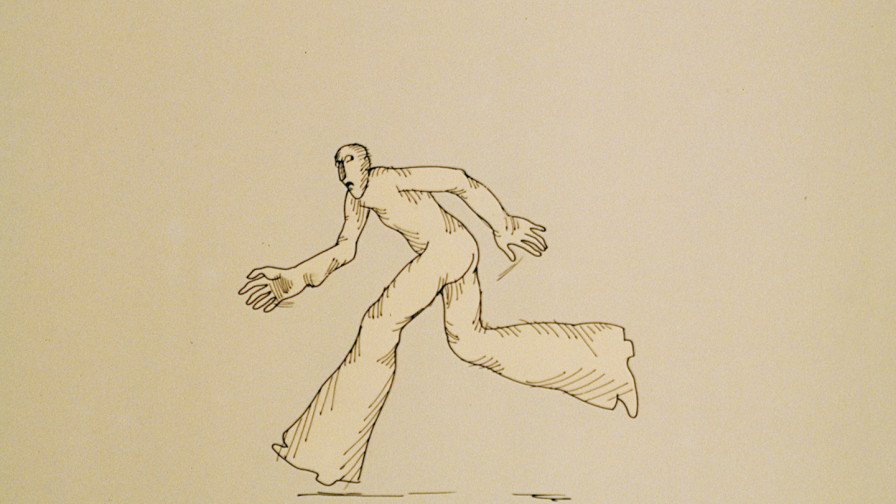
The title of this programme attempts to recognise the intensely productive relationship between the imaginative (or the artistic) and the political in Eastern European animation. For its practitioners, animation provided an outlet for pure, unfiltered aesthetic expression, as illustrated by its gravitation towards modernist visuals, surrealism, and idiosyncratic stylisation combined with experimental filmmaking techniques. Hey, You! by Péter Szoboszlay, for example, makes use of the transmogrifying affordances of animation to produce a dynamic, playful and disorienting depiction of what appears to be a simple narrative premise: a man trapped in a room. Labyrinth by Jan Lenica employs collage and cut-out techniques that present an upside-down version of 20th century Europe, with echoes of Giorgio De Chirico's empty, portentous urban landscapes, and Hannah Höch's dadaist photomontages.
Yet simultaneously, animation also offered a language that could effectively address the political conditions under which Eastern Bloc citizens were subject. Hey, You! equally draws attention to the attritional effects of perpetual state surveillance, and Labyrinth may be treated as an allegory about the absurdity of life under communism. Its frequent recourse to indirectness, abstraction, and narrative ambiguity enabled animators to embed deeper messages that struck the heart of the Soviet system (or in the case of Yugoslavia, the Titoist regime). Animation in this period, then, represented a unique confluence of politicised imagination and imaginative politics.
The synergy of these imaginative and political currents diverged significantly from what could found in the West at the time – with some notable exceptions, of course, including the Quay Brothers and Terry Gilliam, who were deeply influenced by the region's output. The monopoly of American animation studios like Disney and Warner Bros. ensured Western audiences were arguably far less exposed to the auteur, poetic, and subversive animated films than what their Eastern European counterparts experienced.
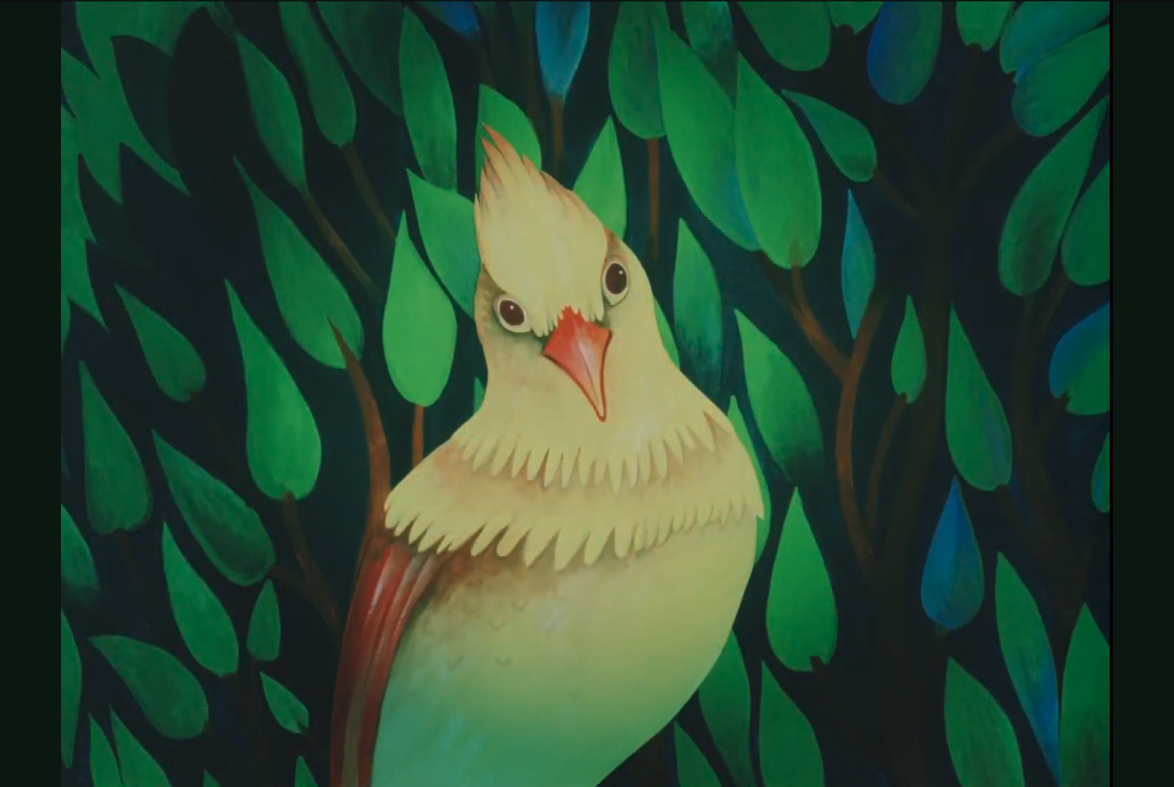
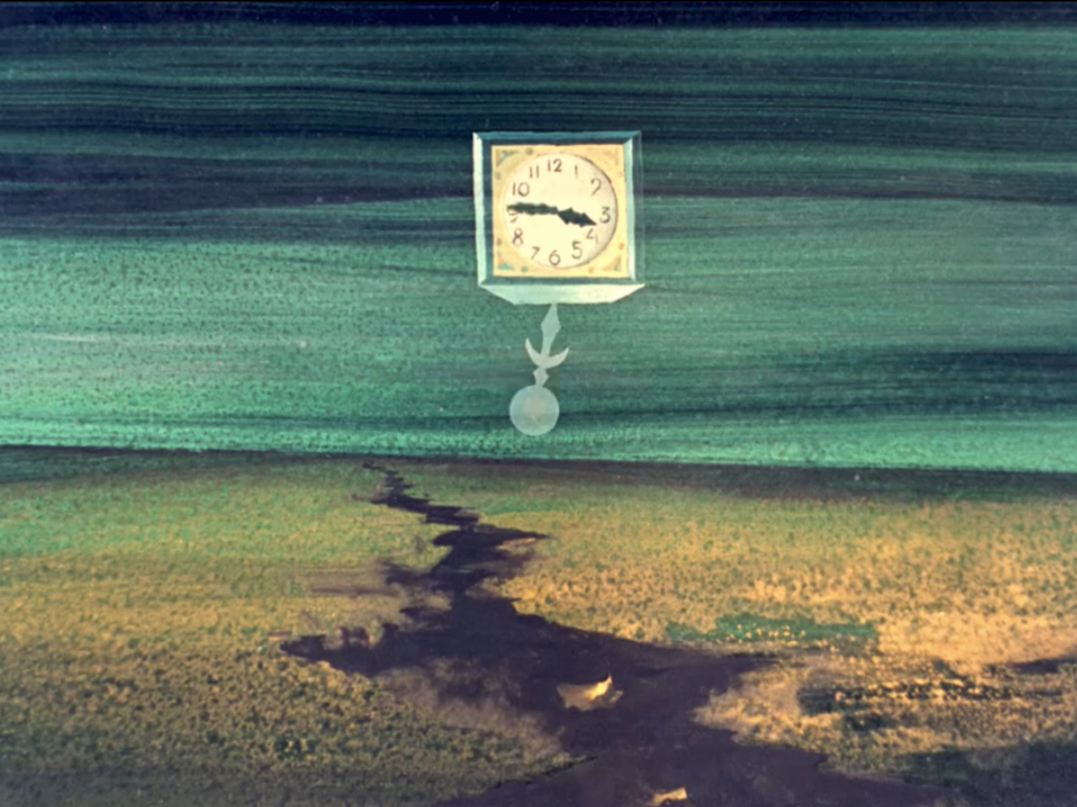
However, it is important not to interpret Eastern European animation entirely through its assumed dissident, anti-Soviet stance, in which the values of Western liberalism and free speech are triumphantly put on display. More radically, perhaps, Eastern European animation presents a critique of all societies, capitalist and socialist, that enforce homogeneity and conformity and normalise conflict and division. Vatroslav Mimica's Happy End – produced at a time of escalating Cold War tensions – presents a vision of the world implied to be ruined by nuclear warfare. However, Happy End's message also has just as much relevance to the twin catastrophes of climate change and biodiversity loss facing this century. Dóra Keresztes & István Orosz's Golden Bird and Robert Sahakyants' Wow, a Talking Fish! reassert the power and value of local folk tradition in the context of cultural loss through globalisation. There is also a sense that the pure craftsmanship of Eastern European animation – all of which was manually produced – offers a bold statement against the recent rise of 'AI slop' that now floods the digital world.
Although this programme can't do full justice to the incredible diversity and range of Eastern European animation, it hopes to offer, as it has done in previous Samizdat festivals, some glimpse into its endlessly radical, rebellious and ingenious world.
Content notes: sex, nudity, violence
Access notes: flashing lights, loud noises
Curated by Andrew Currie
Afterwards, join us for Samizdat’s Opening Night Party with music from SOFSOF at Stereo. Free entry for Samizdat ticket holders!
Programme (in order of screening)
Happy End / Srečen Konec by Vatroslav Mimica, 1958
Labyrinth / Labirynt by Jan Lenica, 1963
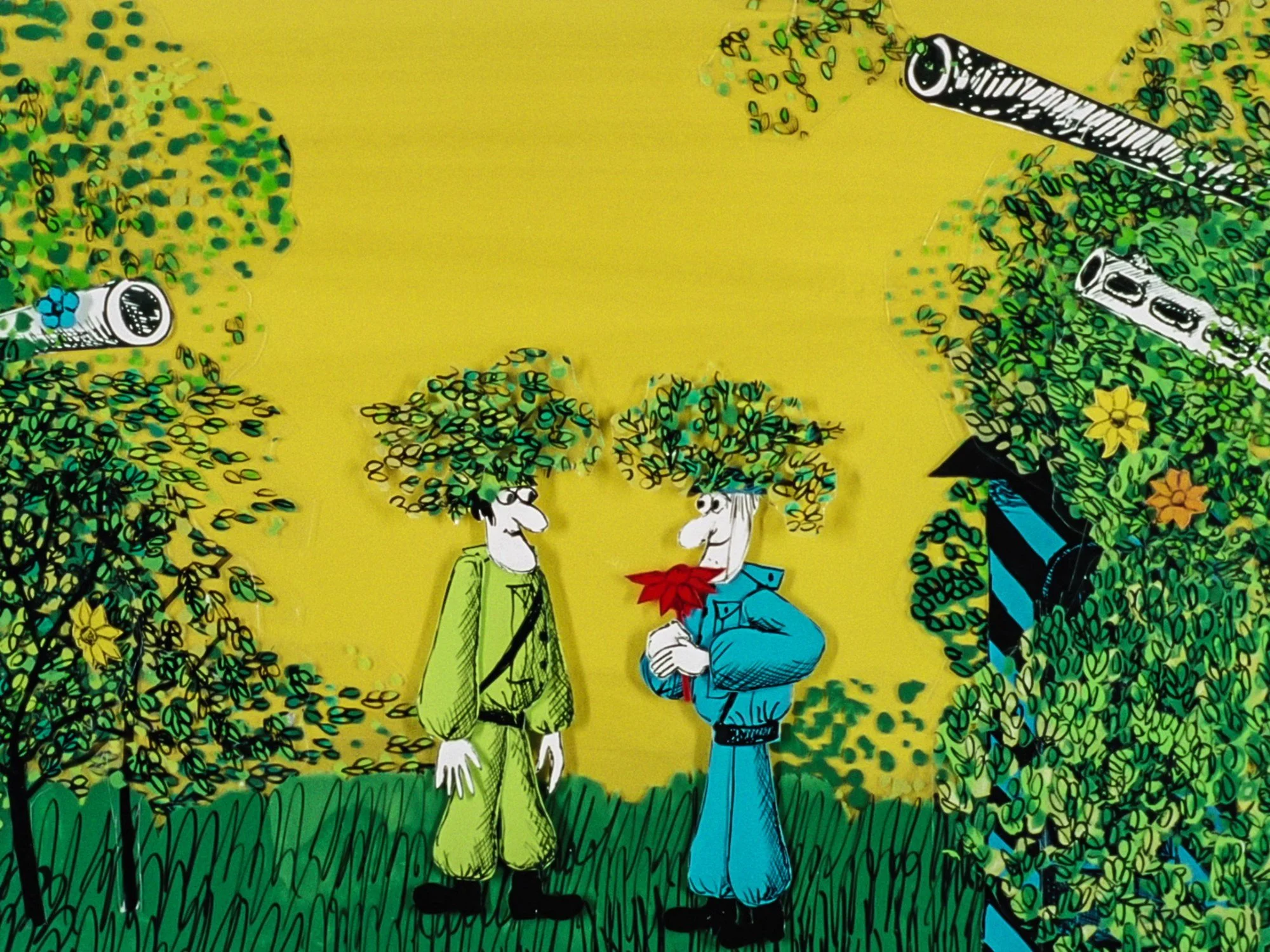
Si vis pacem... by Zofia Oraczewska, 1975
Hey, You! / Hé, Te! by Péter Szoboszlay, 1976
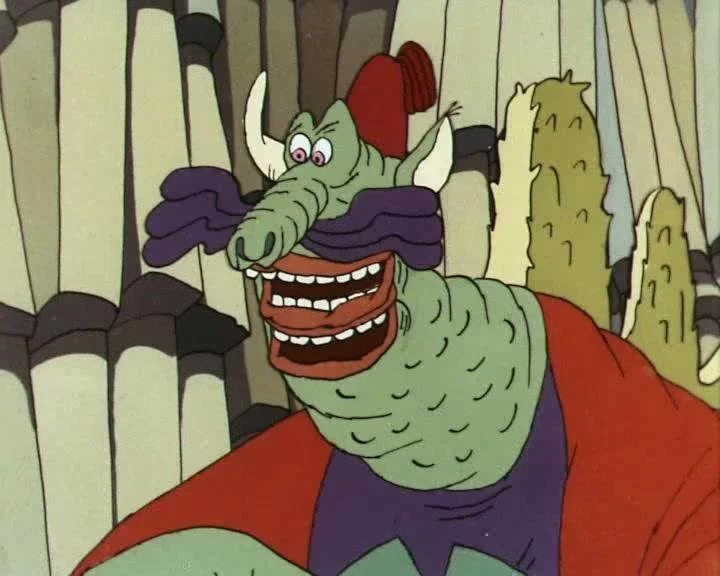
Wow, a Talking Fish! / Ух ты, говорящая рыба! by Robert Sahakyants, 1983
Golden Bird / Aranymadár by Dóra Keresztes & István Orosz, 1987
Incipit Vita Nova by Hardi Volmer, 1992