
Scottish premiere
Wheelchair accessible* | In Romanian and Persian; with English subtitles | 18+
Pay-what-you-can tickets (£4 / £7 / £10)
If the ticket or other costs, such as childcare or transport, make this screening unaffordable, please see details of our Audience Access Fund.
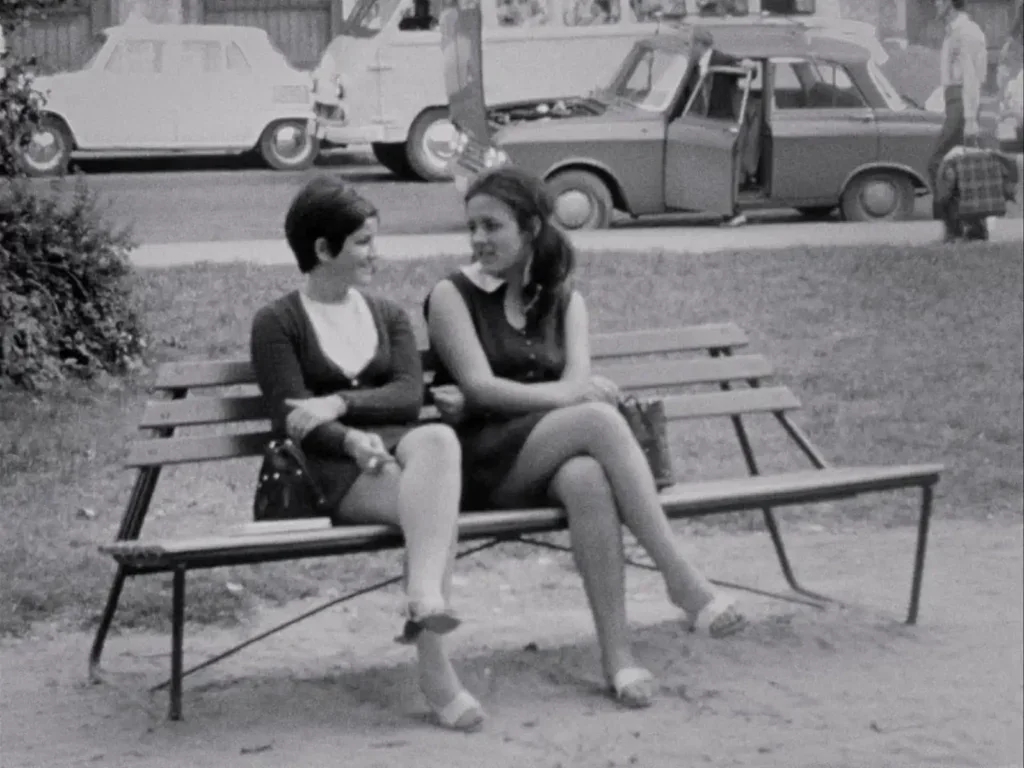
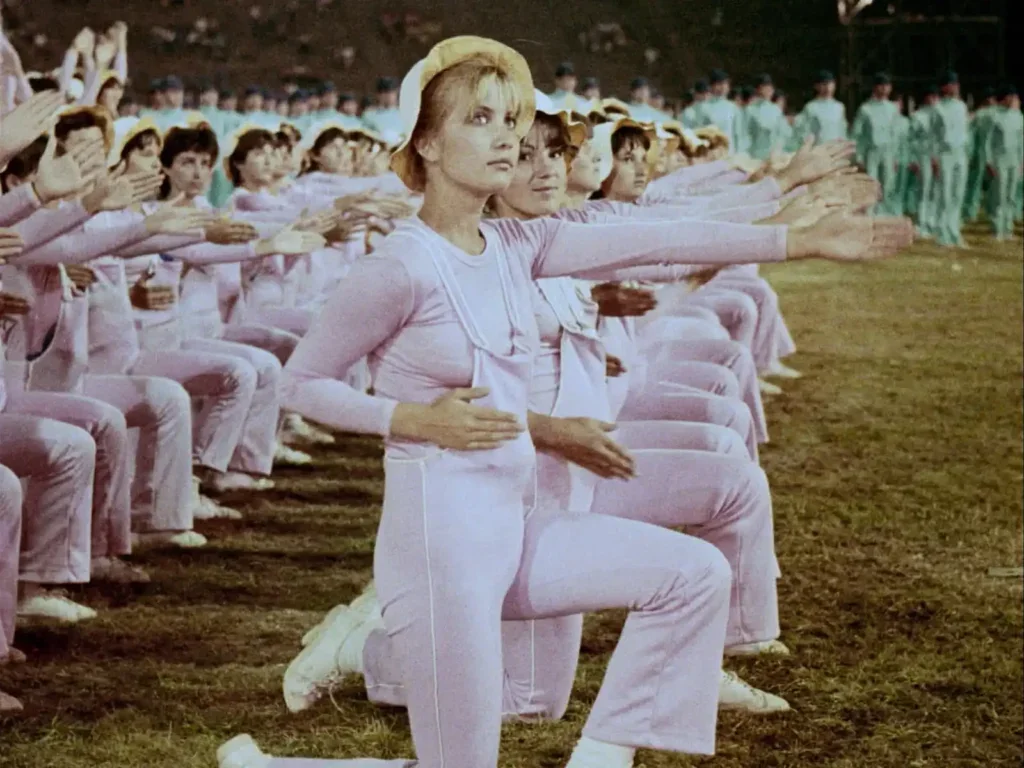
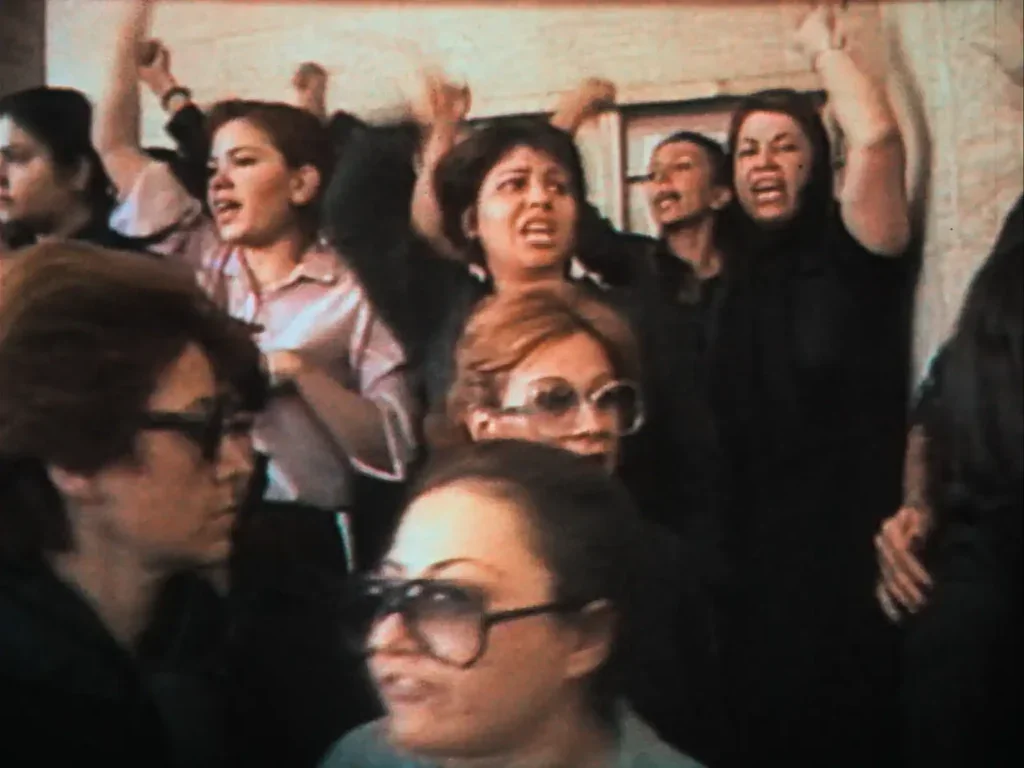
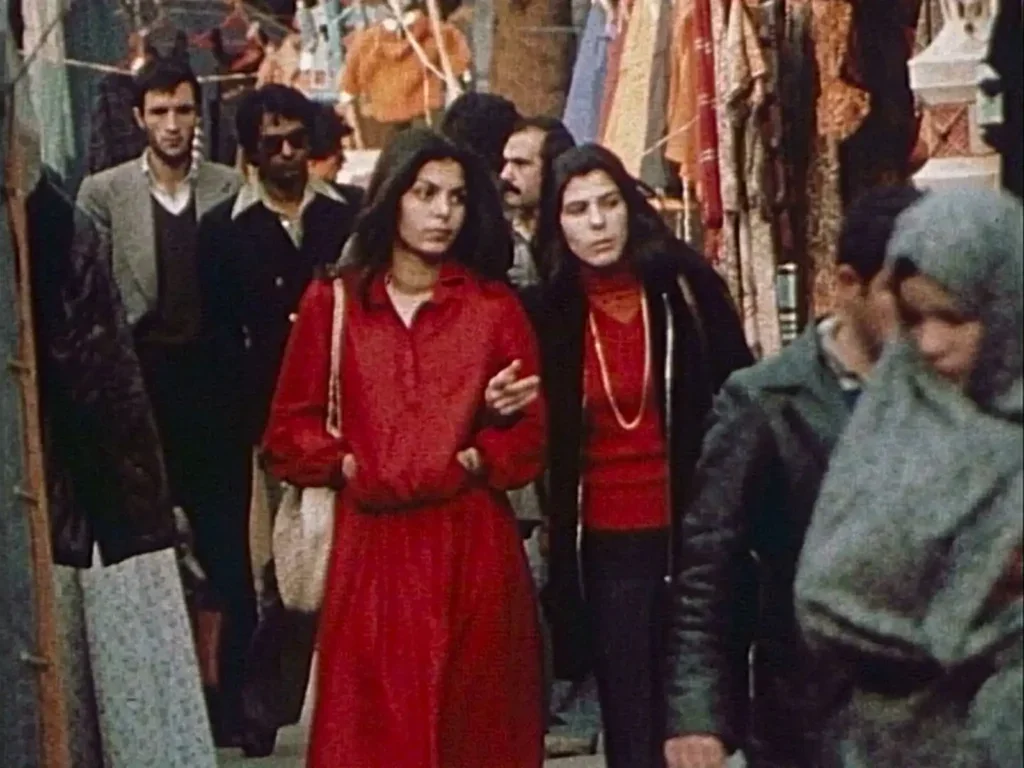
Part love story, part political essay and part speculative archive, Between Revolutions places two fictional women within histories whose images can never quite contain them. Built from archival footage and fictional correspondence, the film follows two women living through the political upheavals of Romania and Iran.
Maria and Zahra meet while studying medicine in Bucharest in the 1970s. When Zahra returns to Tehran as the 1979 revolution approaches, their relationship continues through letters, spanning the decade leading up to the collapse of Ceaușescu’s regime in 1989. Their voices – shaped by archival research, surveillance documents, private correspondence, and the poetry of Forugh Farrokhzad and Nina Cassian – are overlaid on images drawn from both official and personal archives: demonstrations, political ceremonies, classrooms, beaches, and city streets. Maria and Zahra are never given fixed bodies within this footage, yet gradually seem to inhabit it. A woman glimpsed in a Tehran crowd or crossing a Bucharest street can momentarily become either one. This absence gives the film much of its force. Rather than simply illustrating the letters, the archive is made newly uncertain by them. Public and political spaces are often overwhelmingly masculine, while Maria and Zahra’s correspondence registers what such images struggle to preserve: affection, desire, political hesitation, surveillance, expectations of marriage and motherhood, and the gradual narrowing of possible futures.
Petri brings the histories of Iran and Romania into dialogue without treating them as equivalent. Women participate actively in the Iranian Revolution, only to face increasing restrictions under the Islamic Republic; in Romania, the end of Ceaușescu’s dictatorship brings a very different mixture of liberation, uncertainty and disillusionment. In both, the film is less interested in revolution as a monumental event than in what happens when collective promises enter individual lives. Neither history follows a simple path from repression to liberation, leaving Between Revolutions in the uncertain space between political hope and what ultimately comes of it.
Content notes: war, physical violence
Curated by Alexandra-Maria Colta (Scottish Documentary Institute) and Ania Wieczorkowska
* Please note, The Lower Hall at the Pyramid at Anderston is wheelchair accessible through a ramp at a side entrance. There are 9 steps between the level where it is located and the rest of the venue, meaning that to make way to the accessible toilet or other parts of the building, wheelchair users will need to re-enter via the main entrance. We apologise for any inconvenience this may cause.